
// Industries · Transport & Logistics
IT for transport and logistics
Scanners, forklifts and gate control all hang on the radio network. When coverage stops before the last aisle, nobody works more slowly — everybody waits.
// Area, not floor plan
Connectivity does not stop at the office wing
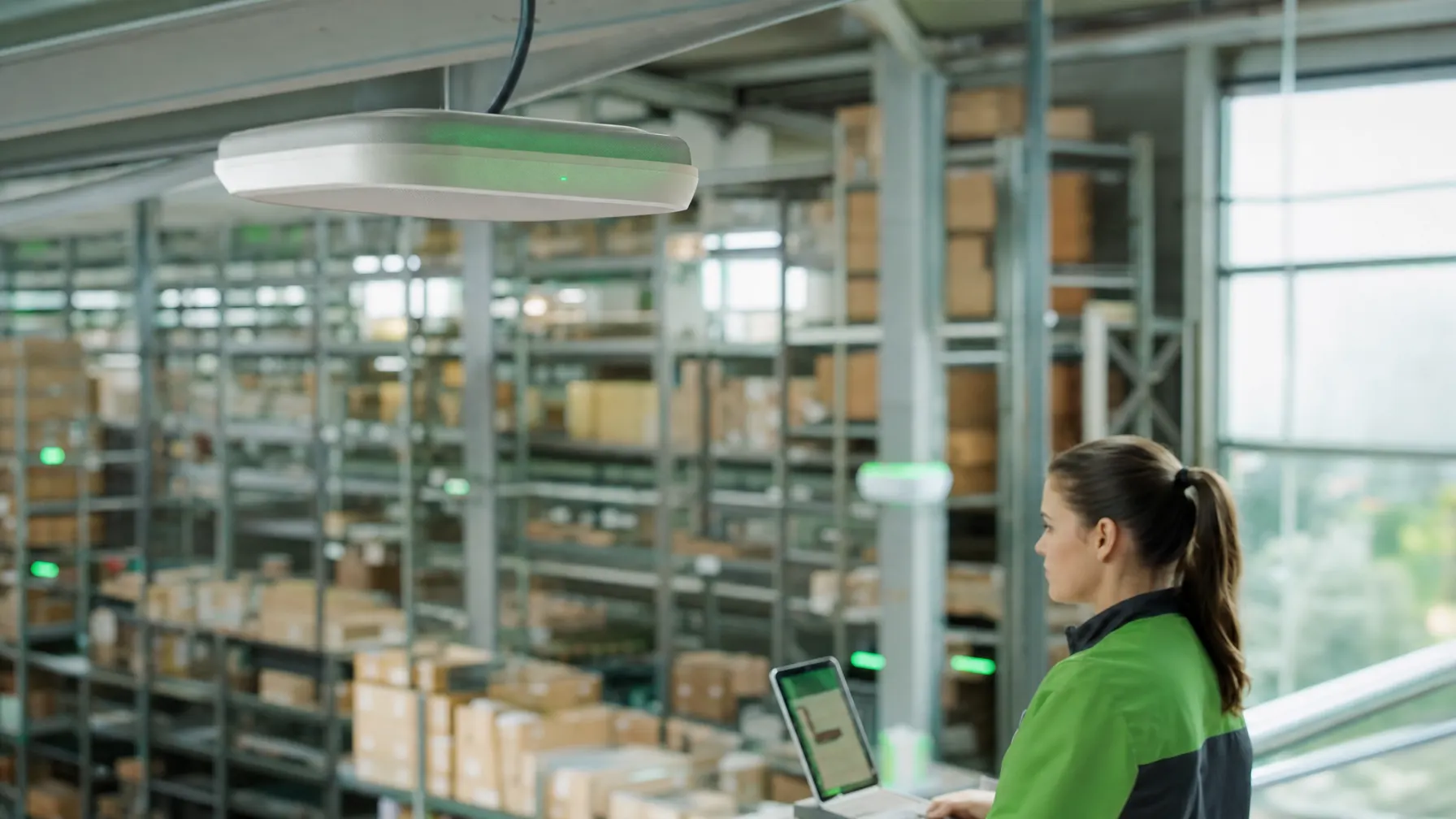
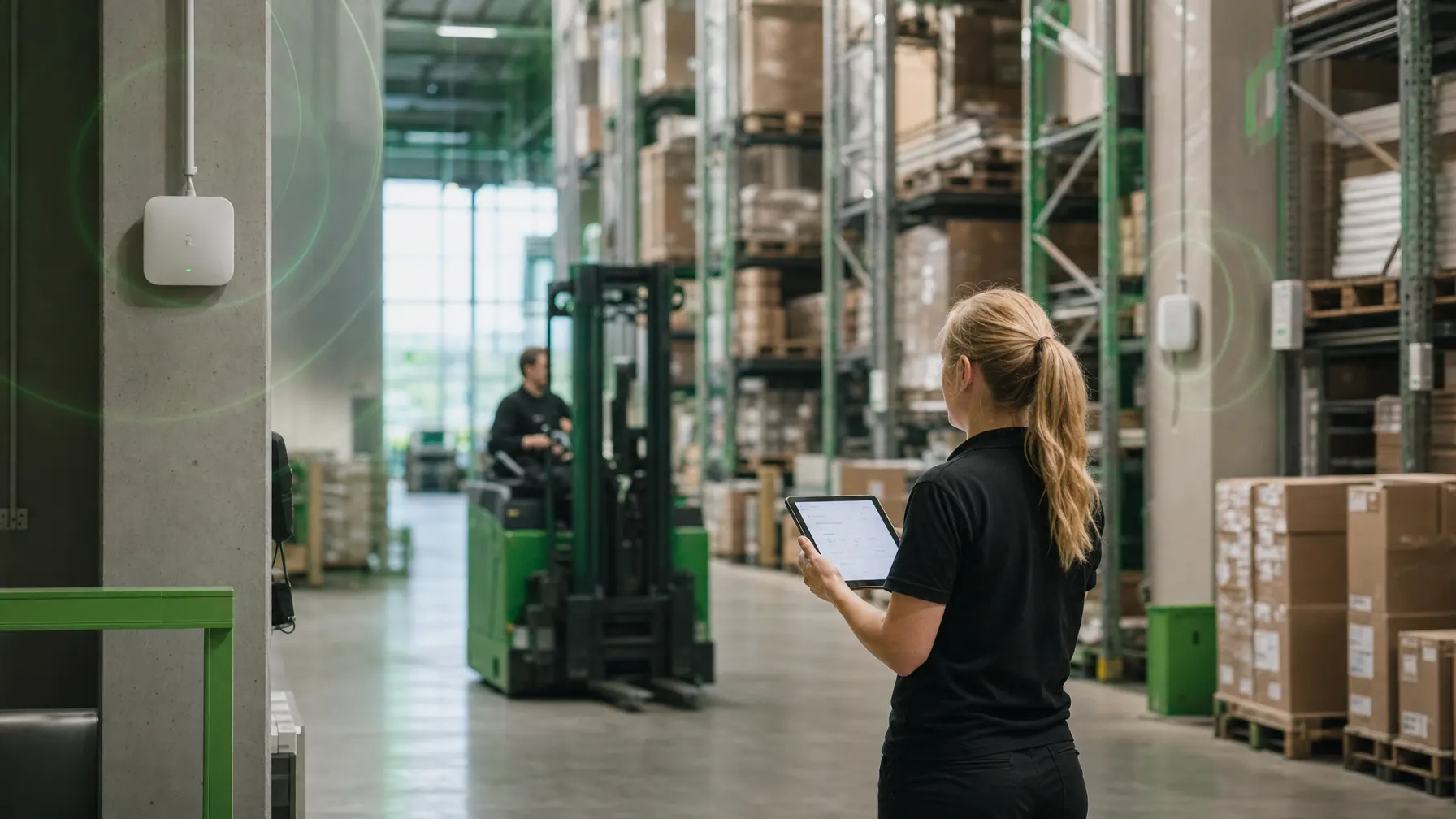
In goods handling, almost every movement depends on the network: the scanner confirms a pick, the forklift receives its next job, the gate reports an arrival, the warehouse system books it all immediately. If the connection drops, nobody works more slowly — everybody waits.
The difficulty is the area. Tall racking casts shadows, metal frames move with the stock, chilled zones and outdoor storage follow their own rules, and the yard is often left out of the plan entirely. One access point in the middle of the hall will not carry that.
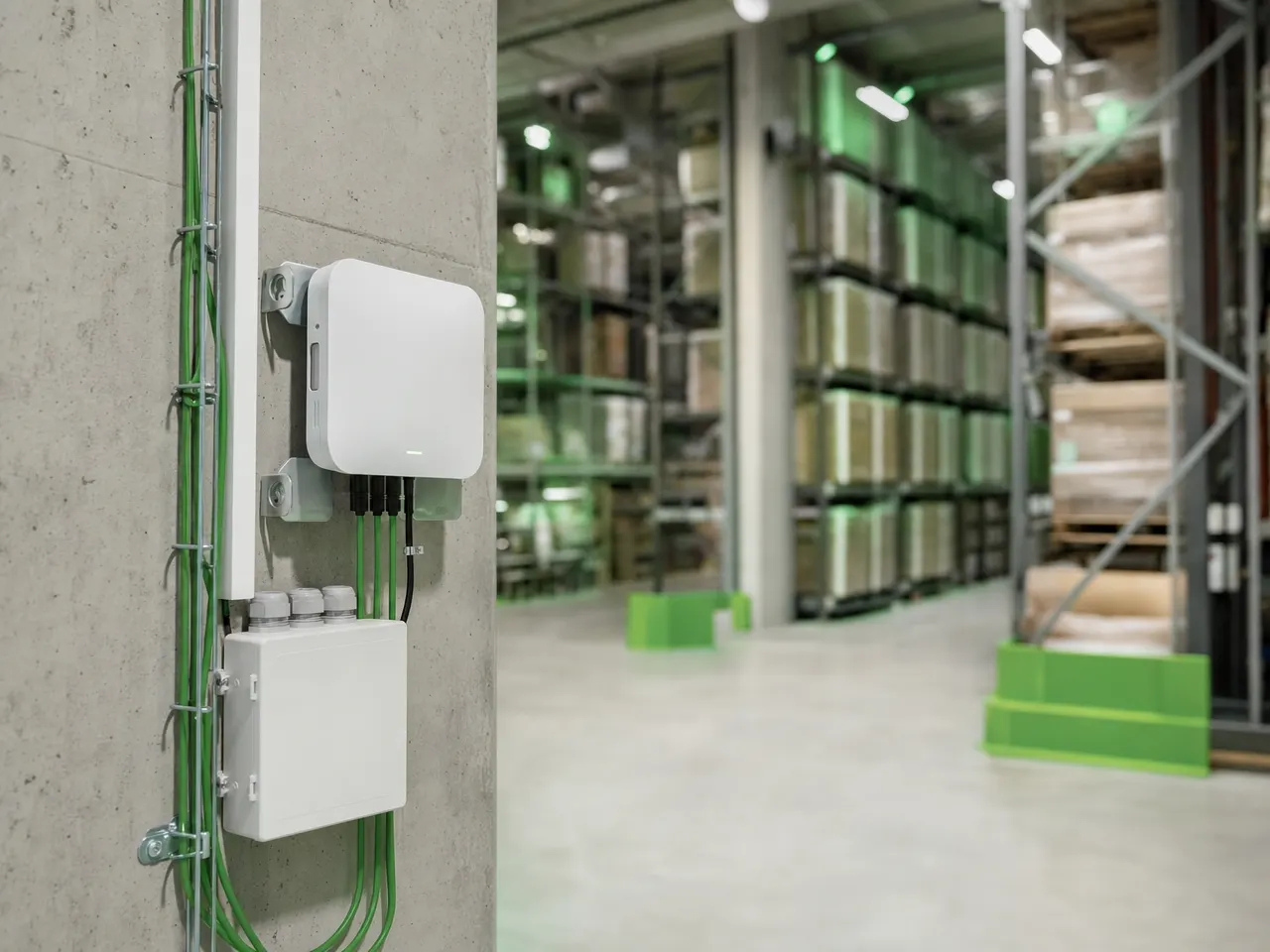
So we plan radio coverage with measurements instead of rules of thumb: survey, mount, measure again, document. And we follow the path further — from the handheld through hall and yard to the link that ties the other sites in.
// Requirements
What a warehouse network has to take
Where radio planning in logistics operations regularly runs into its limits.
-
Coverage into the aisle
Surveys are done with the racks full, not empty. Where stock moves around, we check again — otherwise the plan is only true on handover day.
-
Handover without a break
A handheld changes access point several times while driving through. That has to pass unnoticed, or the session breaks in the middle of a booking.
-
Other people’s devices in your network
Carriers, temporary staff and visiting drivers bring their own equipment. That belongs in a separate area which sees neither stock data nor gate control.
-
Keep working on a broken line
If the connection fails, handling must not stop: a fallback link, the important services reachable in-house, and a clear rule for what applies in the meantime.
// Building blocks
What we build in logistics operations
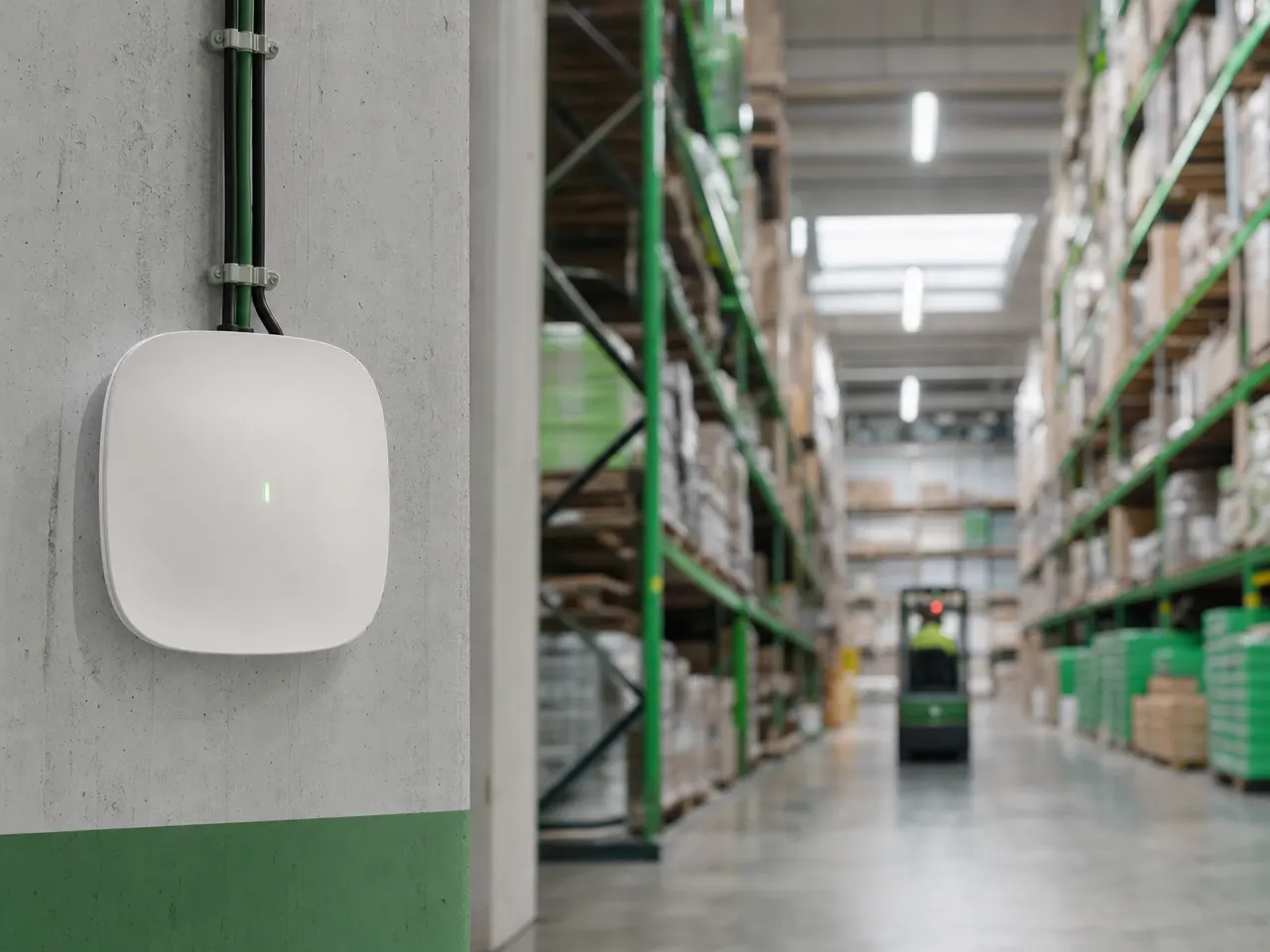
From the radio cell above the racking to the link that ties in the second transfer point.
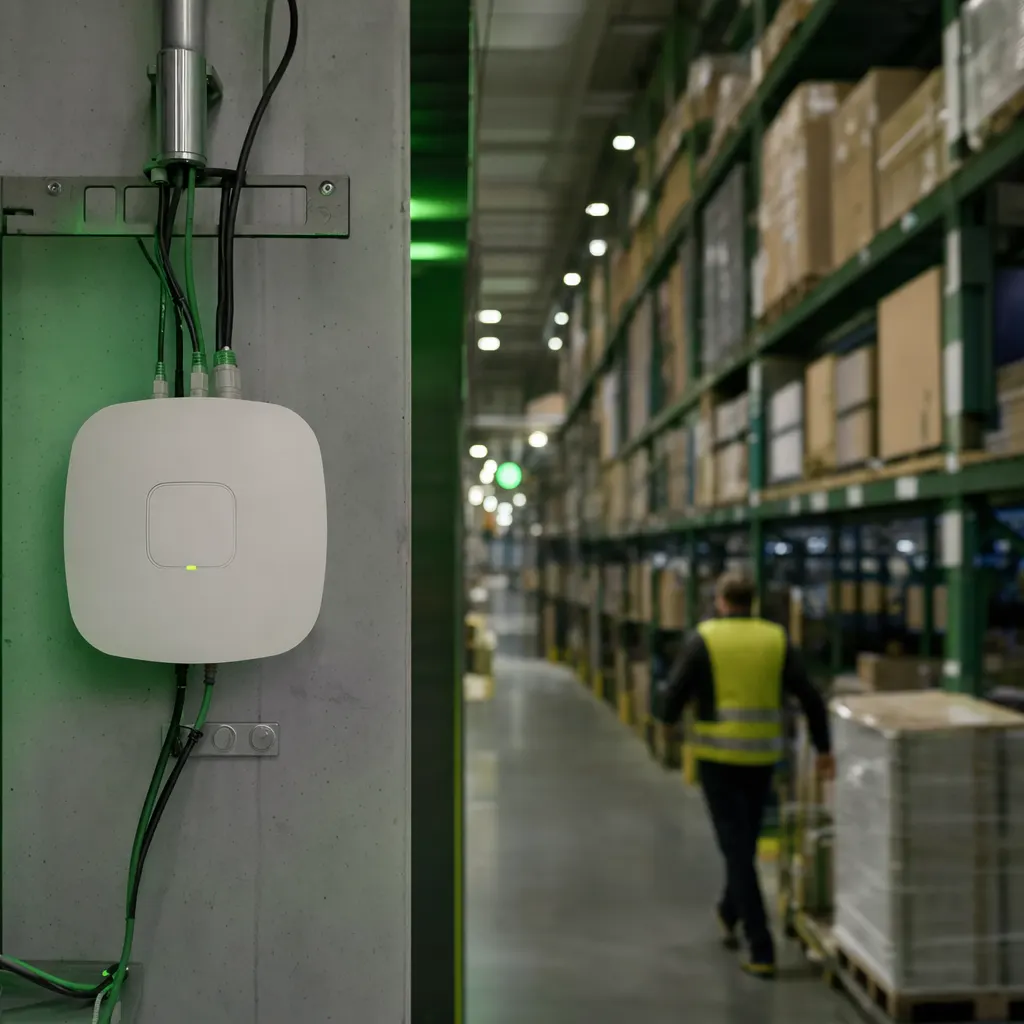
Wi-Fi for hall and yard
Survey, mounting and a second measurement — including the places where racking height, cold or weather drive the plan instead of the floor drawing.
See Business Wi-Fi
Mobile devices under control
Handhelds, tablets and forklift terminals configured, kept updated and locked when one goes missing.
A fallback for the link
A second line, encrypted coupling and agreed emergency rules, so that goods keep moving.

Sites in the same rhythm
Warehouse, transfer point and administration with shared user management and monitoring across every building.
Help across the shifts
Support early, late and at weekends — goods handling does not follow office hours.
// How we work
From the survey into live goods handling
Four steps that we take in this order on warehouse and yard projects.
Check radio in a full warehouse
We measure with stock on the racks, in the chilled zone and out on the yard — including the places nobody has looked at so far.
Fix positions and routes
The survey turns into mounting points, channels and the cabling to reach them. Where runs are missing, we plan copper or fiber at the same time.
Mount, connect, measure again
Installation happens section by section during normal operation. After mounting we measure once more; at acceptance you receive a report on the runs we installed.
Monitor and adjust
Stock changes, racking gets rearranged. We keep coverage under monitoring and adjust it, rather than waiting for complaints.
// When the network is gone
A warehouse without a network is a warehouse without stock.
The moment bookings stop, nobody knows for certain what is where any more. Sorting it out afterwards takes longer than the outage itself — which is why the connection gets a fallback.
Network & ConnectivityIf the main connection fails, a second route takes over without anybody replugging a cable.
The important services stay reachable in the building, even when the path outward is missing.
What gets booked, printed and entered later during that time is agreed in advance.
Monitoring reports the outage before the first shift notices it.
// Questions on logistics IT
Coverage, the yard and shift work
01 Can we get reliable Wi-Fi in a tall warehouse?
Yes, if it is surveyed and then measured again. We measure with the racks full, place the mounting points accordingly and check once more after installation. The readings are handed to you in writing at acceptance.
02 Does coverage reach the yard and the outdoor storage area?
We plan that in. Outdoor areas need weatherproof equipment, different mounting points and their own supply. Where cable is missing we pull it ourselves — copper or fiber, depending on the distance and the surroundings.
03 Do you set up handheld scanners and forklift terminals?
Yes. Devices are configured, enrolled in management, kept updated and locked if one goes missing. The warehouse application itself stays with your software vendor; the environment underneath it sits with us.
04 Can you connect several sites?
Yes. Warehouses, transfer points and administration are coupled over encrypted links, with shared user management and monitoring that shows every site in one view.
What belongs to hall, yard and site
Show us your warehouse.
Tell us where the connection breaks today — high up in the racking, in the chilled zone or out on the yard. We measure it and say what it takes.